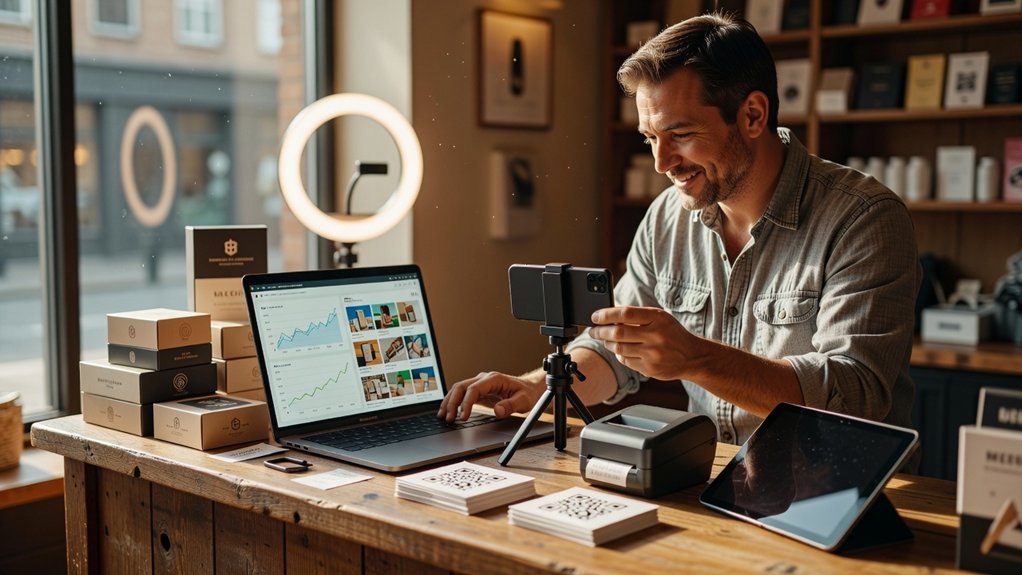
In 2026, you’ll win online by tightening first‑party tracking, improving local SEO that feeds AI results, and focusing on assets that convert. Keep your Google Business Profile accurate, add intent-focused location pages with schema, and build steady 4.5+ review velocity with fast replies. Publish 2–4 short videos weekly to earn saves and repeat visits, automate a 5–7 email nurture sequence, and partner with micro-creators using codes and UTMs. Next, you’ll see how to pick channels and measure CAC.
Key Takeaways
- Shift to first-party, opt-in data with server-side tagging, GA4+CRM dashboards, and blended ROI using holdouts and modeled conversions.
- Win local discovery by optimizing Google Business Profile, keeping NAP consistent, adding location pages with schema, and responding to reviews within one day.
- Publish 2–4 short videos weekly with strong first two seconds, clear CTAs, and A/B-tested hooks to drive saves, replies, and repeat visits.
- Automate lead nurturing with 5–7 short emails triggered by intent, segmented by stage, personalized dynamically, and tracked by revenue—not just opens.
- Improve landing pages with one clear above-fold promise, scannable benefits, strong proof, and repeated specific CTAs tied to tracked forms, calls, chats, or bookings.
What Changed in Small Business Marketing in 2026
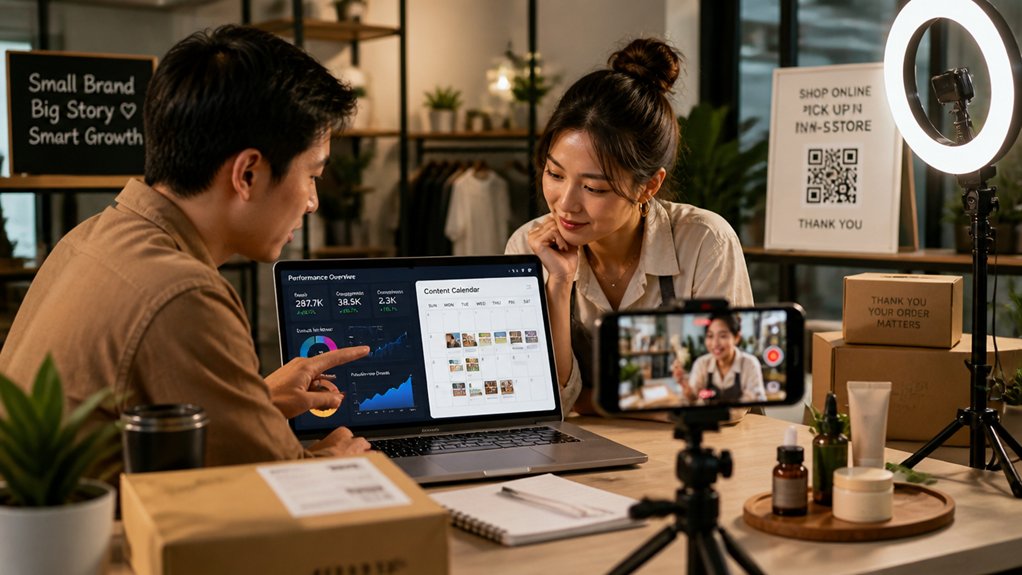
While the core channels haven’t disappeared, small business marketing in 2026 looks different because platforms, customers, and tracking rules all shifted at once. You’re dealing with less third-party data, more opt-in expectations, and measurement that depends on server-side tagging, modeled conversions, and clean first-party lists.
Attribution gets noisier, so you lean on blended ROI, holdout tests, and tighter CRM tracking.
At the same time, changing consumer behaviors push people to research longer, trust peers more, and buy faster once confident—so your proof, reviews, and FAQs must be easy to find. Meanwhile, evolving digital algorithms reward relevance, retention, and creative variety, not just spend.
If your content doesn’t earn saves, replies, or repeat visits, costs rise quickly.
Choose the Best Marketing Channels (Goal + Budget)
Because no channel performs the same across goals and budgets, you’ll get better results by picking 2–3 primary channels that match what you’re trying to achieve (leads, ecommerce sales, foot traffic, or retention) and what you can realistically spend each month.
Start with where your target audience already pays attention: search and review sites for intent, social for discovery, email/SMS for repeat buys, and marketplaces if you need fast demand.
Set a test budget you can afford for 6–8 weeks, then track marketing metrics that tie to profit: cost per lead/order, conversion rate, average order value, and payback period.
If you’re local-service, prioritize high-intent ads plus follow-up automation. If you’re ecommerce, split spend between shopping ads and retention flows.
Kill channels that miss benchmarks; scale what beats them.
Win AI Search Results With Small Business Local SEO
After you’ve picked your 2–3 primary channels, make sure local search can actually convert that demand—especially now that Google’s AI Overviews and tools like ChatGPT pull answers from your Business Profile, reviews, and consistent citations.
Treat local SEO like inventory: clean data in, qualified leads out. Audit NAP consistency across top directories, your site, and social profiles; one mismatch can suppress map visibility.
Build location pages that answer intent (“pricing,” “near me,” “hours,” “parking”) and mark them up with LocalBusiness schema so AI integration can extract facts reliably.
Keep review velocity steady and respond with service-specific details; that boosts topical relevance and trust signals.
Use Customer personalization by publishing FAQs for your neighborhoods and customer segments, then track clicks, calls, and direction requests to prove ROI.
Optimize Your Google Business Profile for Calls
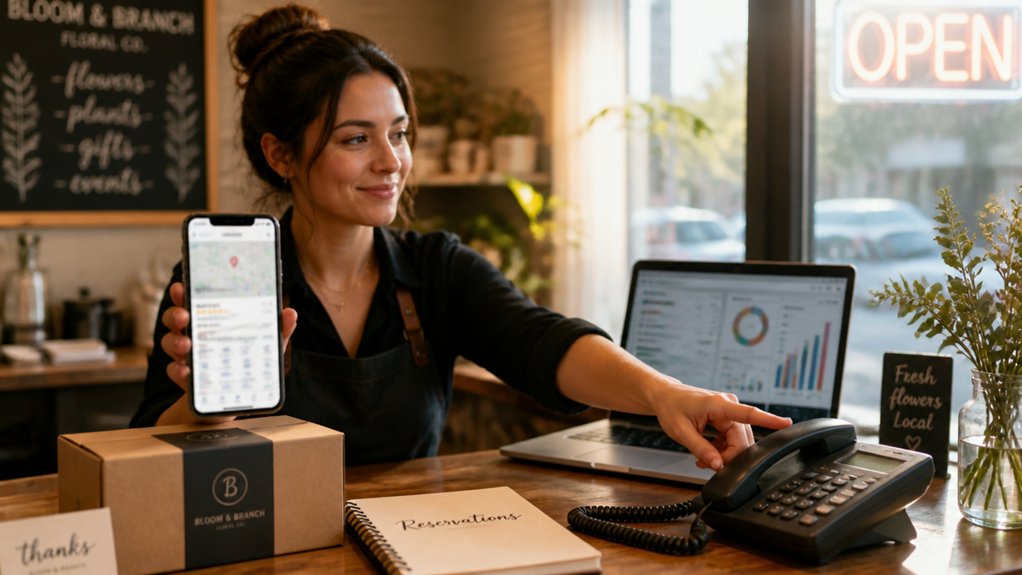
If you want more phone leads from local search, treat your Google Business Profile like a call-conversion landing page, not a digital brochure. Set your primary category to match your highest-intent service, then add secondary categories only where you can deliver.
Turn on call history and track calls by day and keyword so you can spot what’s working. Write a short, scannable “from–to” service blurb and list clear Local service areas so Google knows where to rank you.
Make “Call” your top action: add a local number, confirm hours, and use appointment links only if they reduce missed calls. Upload real job photos and add Customer testimonials in posts to reduce uncertainty.
Reply fast to Q&A to prevent call-killers.
Get More Reviews and Fix Your Local Citations
While your website can sell the click, reviews and citations often win the local ranking fight—and the phone call. You need a steady review engine and clean business data across the web to convert “near me” searches into bookings.
Start by asking every happy customer within 24 hours, using a one-tap link via text or email. Give staff a script, track request-to-review rate weekly, and respond to all Customer reviews within one business day to lift trust and keywords. Aim for 4.5+ average and consistent velocity, not bursts.
Next, audit Local citations: your name, address, phone, categories, and hours must match everywhere. Fix duplicates, update top directories, and lock profiles to prevent future edits. Consistency boosts map visibility and reduces lost calls.
Publish Short-Form Videos Customers Actually Watch
Because attention drops fast on social feeds, you need short-form videos that earn the first two seconds and deliver a clear payoff. Open with the outcome (“See the stain vanish”) or a bold number (“3 fixes under $10”), then prove it fast. Keep clips 8–20 seconds, add on-screen captions, and cut every pause; watch-through rate beats views for reach.
Use Video storytelling: problem, one step, result, next step. Show real customers, receipts, or before/after to build trust.
Post 2–4 times weekly and A/B test hooks, thumbnails, and first-frame text; keep winners, kill losers.
Tie every video to one action: book, call, buy, or reply. That consistency lifts Customer retention and lowers paid ad spend.
Build a Real Community on Social (Weekly Plan)
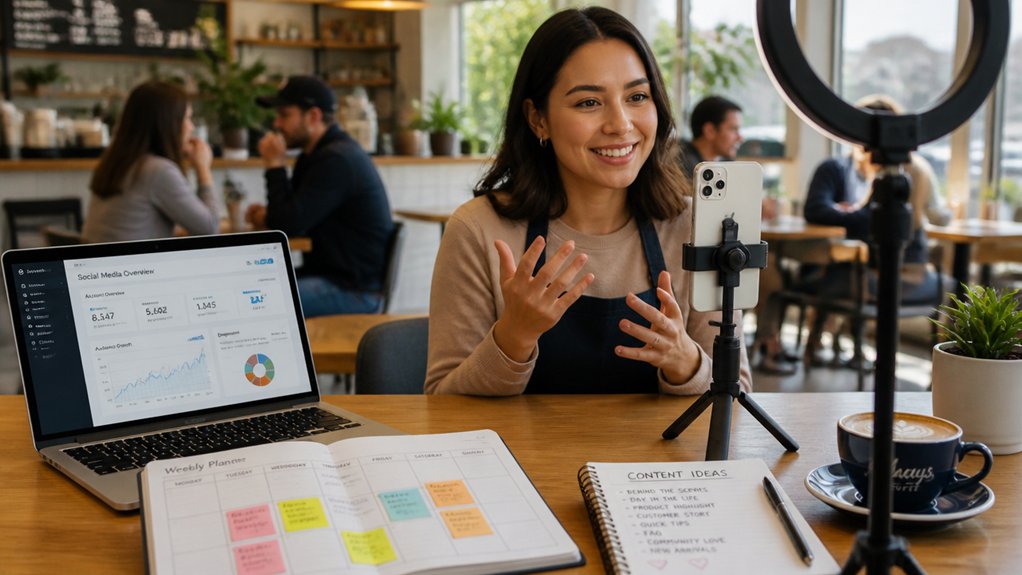
To build a real community on social, you can’t just post—you’ve got to engineer weekly engagement with intent and track replies, saves, and DMs as leading indicators.
Set weekly engagement themes, then run two-way content loops that turn customer comments and questions into your next posts and polls.
Lock it in with live community rituals (like a 15-minute weekly Q&A) so people show up, participate, and feel seen.
Set Weekly Engagement Themes
One simple shift can raise your social engagement fast: set weekly themes that give people a clear reason to comment, share, and come back. Pick 4–6 repeatable pillars (tips, behind-the-scenes, customer spotlight, quick demo, local story) and assign each to a weekday.
This reduces decision fatigue and lifts posting consistency—often the biggest driver of reach on algorithmic feeds. Keep the format predictable (same hook, same length, same visual template) to reinforce branding consistency in every scroll.
Track three numbers weekly: saves, comments per impression, and profile visits; double down on the theme that wins. Over 8–12 weeks, those familiar beats build trust, which compounds into Customer loyalty and steadier sales. Rotate seasonal themes quarterly.
Run Two-Way Content Loops
Weekly themes keep you showing up consistently; two-way content loops make people stick around and participate. Build a weekly loop: post a prompt, capture responses, publish what you learned, then ask the next question.
On Monday, run a poll or “this-or-that” to surface Customer feedback fast. Tuesday, reply to every thoughtful comment and pin the best ones to signal what you value. Wednesday, turn answers into a carousel: “Top 5 picks from you,” with one data point (percent, count, or trend).
Thursday, share a short behind-the-scenes tweak you made based on input; that proof boosts trust. Friday, segment by interest and do Content personalization: reshare user tips, recommend one product/service per segment, and ask a follow-up question to restart the loop.
Host Live Community Rituals
How do you turn casual followers into people who actually show up, talk, and buy? You schedule predictable community rituals that train attention.
Pick one weekly live slot (20–30 minutes) and keep it unchanged for 8 weeks. Use a simple format: 5-minute win, 10-minute teaching, 10-minute hot seats, 5-minute offer.
Promote it with three reminders: 48 hours, 4 hours, 15 minutes.
Track show-up rate, comments per minute, and DMs after; aim to improve one metric weekly.
Anchor local engagement by rotating themes tied to your city: “Tuesday Austin Q&A,” “Shop Local Friday deals,” or neighborhood spotlights.
End every session with one clear next step: book, buy, or refer.
Automate Small Business Email for Leads and Repeats
Because most leads won’t buy on their first visit, automated email gives you a reliable way to follow up without adding hours to your week.
Start with Email automation that triggers from intent: a form fill, a checkout abandon, or a booked consult.
Build a 5–7 email sequence over 10–14 days: one quick win, one proof point, one objection handler, one offer, and one reminder.
Keep each email under 150 words and add one clear CTA.
For Lead nurturing, segment by interest and purchase stage, then personalize with dynamic blocks (service, location, last viewed product).
Track open rate, click rate, and revenue per recipient; pause weak subject lines and resend to non-openers.
Add post-purchase flows to drive repeats and reviews.
Partner With Micro-Creators to Reach Local Buyers
To reach nearby buyers fast, you’ll get more traction by partnering with hyperlocal micro-creators whose followers match your zip codes and buying habits. You can find them by scanning local hashtags, neighborhood groups, and creator analytics.
Then, shortlisting them based on engagement rate and audience location. Next, you’ll structure a win-win deal—clear deliverables, trackable links or codes, and performance-based perks—so both sides see measurable ROI.
Find Hyperlocal Micro-Creators
A handful of hyperlocal micro-creators—think neighborhood TikTokers, Instagram foodies, or community newsletter writers with 1,000–25,000 nearby followers—can drive more qualified foot traffic than a big influencer with a scattered audience.
Your job is to find the ones whose audience overlaps your trade area.
Start with Instagram/TikTok search for your city + niche (e.g., “Phoenix brunch,” “Austin barber”). Check follower geography in bios, comments, and tagged locations; you want locals talking to locals.
Scan Facebook Groups, Nextdoor, and Substack directories for recurring posters with consistent engagement, not viral spikes.
Build a shortlist by tracking average views, saves, and comment quality across 10 recent posts.
Prioritize hyperlocal influencers who mention neighborhoods you serve.
Then log them in a sheet for future micro creator collaborations.
Structure Win-Win Partnerships
Even if you’re offering a small budget, you can structure micro-creator partnerships that feel fair, trackable, and repeatable. Start with a simple offer: $100–$300 per post plus a performance bonus tied to tracked sales, bookings, or lead forms.
Give each creator a unique code, UTM link, and a landing page that matches their audience’s neighborhood and intent. Agree on deliverables (1 Reel, 3 Stories, 5 photos), timelines, and usage rights up front to avoid scope creep.
Treat these as strategic alliances, not one-off shoutouts. Share your margins and set thresholds (e.g., 10% commission after 5 orders) so both sides win. Review results weekly, double down on top creators, and pause what doesn’t convert.
Improve Small Business Landing Pages to Convert
Because most visitors decide in seconds whether they’ll stay or bounce, your landing page has to prove its value fast and remove friction just as quickly.
Start with one clear promise above the fold: what you do, who it’s for, and the outcome. Keep Landing page design simple—one primary offer, scannable bullets, and a visual that matches intent.
Add proof where it matters: testimonials, ratings, before/after, or short case stats.
Next, focus on call to action optimization. Use a single CTA verb, repeat it 2–3 times, and make it specific (“Get a 10-minute estimate,” not “Submit”).
Cut form fields to the minimum, show privacy reassurance, and guarantee mobile speed stays under two seconds.
Track Leads, Calls, CAC, and Revenue by Channel
While you can’t control every click, you can control what you measure—and that’s how you stop guessing which channels actually grow revenue. Set up Conversion tracking across forms, chats, bookings, and e-commerce, then add call tracking numbers per campaign so phone leads don’t disappear. Push everything into one dashboard (GA4 + CRM) so you see leads, calls, and revenue in the same view.
Next, use Lead segmentation to separate new vs. returning, high-intent vs. low-intent, and by product line. Calculate CAC per channel: (ad spend + tools + labor) ÷ closed customers. Tie every deal back to its first-touch and last-touch source, and review weekly.
If paid search drives calls but low revenue, tighten keywords. If email closes efficiently, scale it. Let data pick your winners.
Conclusion
You don’t need a marketing miracle in 2026—you need cleaner signals. Pick channels that match your goal and budget, then earn AI and local visibility with tight SEO, a call-ready Google Business Profile, consistent citations, and steady reviews. Let email automation do the polite follow-up, and let micro-creators do the friendly intro. Build landing pages that don’t waste clicks. Track calls, leads, CAC, and revenue so “busy” quietly becomes profitable.
About the Author