
If your online presence is a little uneven, you’re not alone. You can raise local rankings fast by keeping your NAP consistent, improving site speed and UX, and tightening trust signals that help visitors take action. You’ll also get more map views by optimizing your Google Business Profile, earning accurate citations, and collecting review volume you actually respond to. The small steps you choose first can shift impressions and clicks in weeks, but only if you prioritize the right ones…
Key Takeaways
- Keep your business name, address, and phone number identical across your website, Google Business Profile, social profiles, and directories.
- Fully complete and regularly update your Google Business Profile with accurate categories, services, hours, photos, posts, and messaging.
- Ask for customer reviews within 24 hours of service and respond to all reviews promptly, professionally, and with relevant service keywords.
- Post consistently on social media using strong visuals, partner tags, local recaps, and clear calls-to-action to drive shares and engagement.
- Track clicks, calls, and direction requests, then double down on high-performing content and fix listings or tactics that underperform.
Make Your Contact Info Consistent Everywhere (NAP)
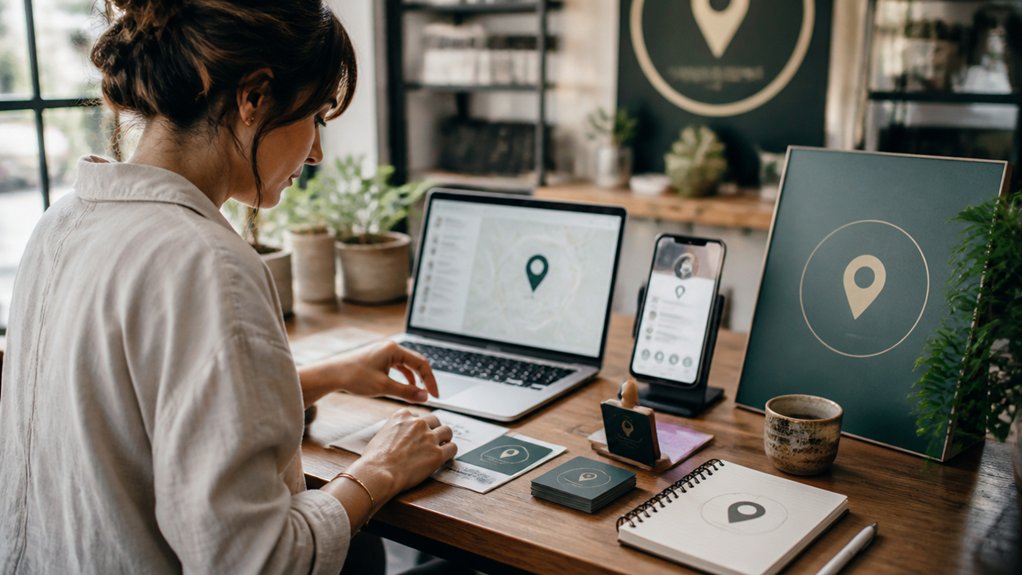
Although it seems simple, keeping your business name, address, and phone number (NAP) identical across your website, Google Business Profile, social profiles, and every directory listing directly impacts local SEO performance. Google cross-checks citations to verify legitimacy; mismatched suite numbers, abbreviations, or tracking phones can split signals and weaken map rankings.
You’ll safeguard Consistent branding and improve contact accuracy by choosing one canonical format and applying it everywhere, including headers, footers, schema markup, and directory profiles. Audit your listings quarterly, fix duplicates, and update changes immediately after moves or number swaps.
Use a single primary phone for citations, reserve call tracking for on-site dynamic numbers, and make certain your GBP categories match. Customers reach you faster, and search engines trust you more.
Build Website Trust Signals That Convert Visitors
Once your NAP stays consistent across the web, your website has to finish the job by proving you’re credible the moment someone lands on the page.
Add visible trust badges (SSL, payment, industry memberships) near forms and checkout to reduce friction and lift conversions.
Publish customer testimonials with names, photos, and specific outcomes, and mark them up with Review schema so search engines can surface rich results.
Show clear policies for shipping, returns, and privacy, and link them in the footer and on key pages.
Use real team photos, an “About” page, and a physical address to reinforce legitimacy.
Improve Core Web Vitals, eliminate intrusive pop-ups, and keep CTAs consistent—faster, cleaner pages earn trust and rankings.
Set Up Your Google Business Profile to Show Up Locally
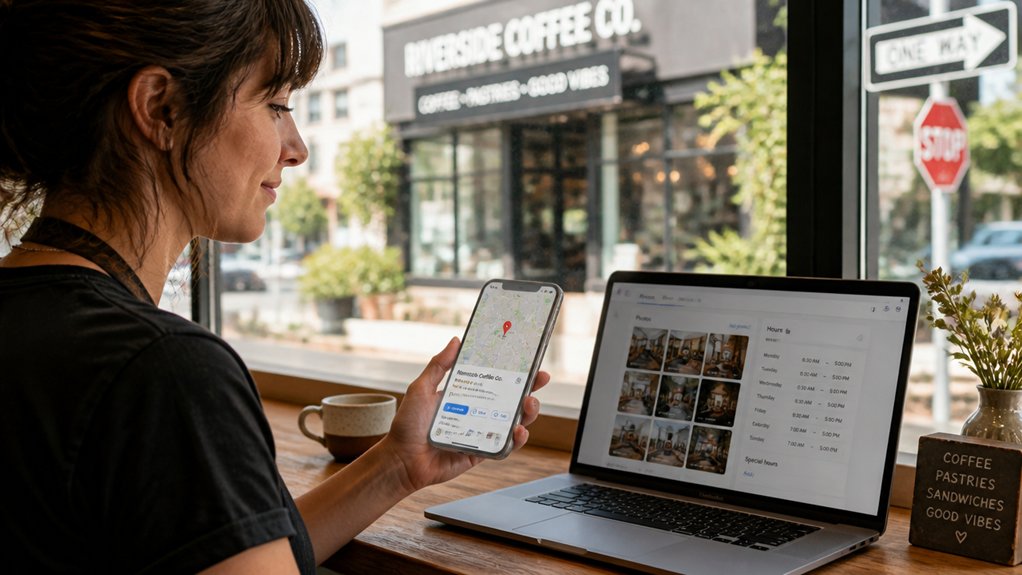
When you want more local calls, direction requests, and walk-ins, your Google Business Profile often becomes the first “website” people see in Google Search and Maps. Claim and verify it, then complete every field: primary category, services, products, hours, and attributes.
Add your real storefront address or service area so you can rank on Google Maps for nearby intent. Use a keyword-rich business description focused on what you do and where you do it, but keep it readable.
Upload high-quality photos and a logo; listings with fresh images typically earn more engagement. Turn on messaging and add FAQs to reduce friction.
Post updates and offers weekly to signal activity. Ask for reviews, reply fast, and include service keywords to boost Local SEO relevance.
Get Listed in the Right Local Directories (Citations)
Because Google cross-checks your business details across the web, consistent local directory listings (citations) can directly improve your local rankings and help customers find you faster. Start by claiming and updating core platforms: Apple Business Connect, Bing Places, Yelp, Facebook, and top niche directories in your industry.
Prioritize Local directory accuracy: keep your name, address, phone, website, hours, and categories identical everywhere. Even small variations (Suite vs. Ste., old tracking numbers, outdated hours) can dilute trust signals and split rankings.
Aim for Citation consistency by using one “source of truth” spreadsheet and updating it quarterly. Remove duplicates, fix closed-location entries, and add rich data like services, photos, and appointment URLs where available.
Track impact by monitoring branded searches, direction requests, and local pack impressions in your analytics tools.
Ask for Reviews the Right Way (and Respond Well)
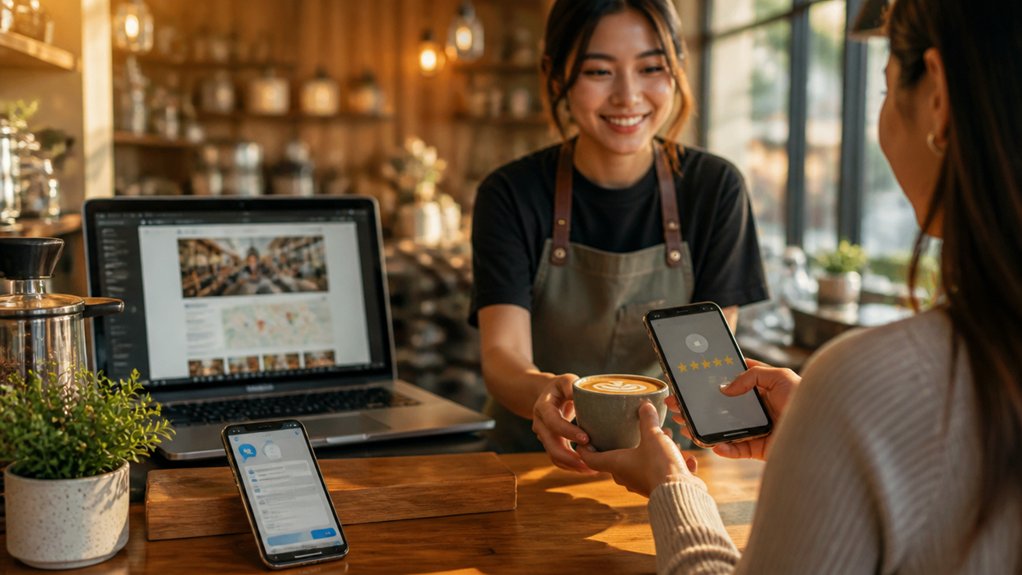
Ask for reviews right after a purchase or service while the experience is fresh, because timely requests typically earn more responses and stronger local SEO signals.
When customers post feedback, you should reply quickly and politely to show reliability and improve conversion-focused trust. Fast, professional responses—especially to negative reviews—can turn complaints into resolutions that boost your Google Business Profile performance.
Time Requests After Purchase
Right after a purchase, your customer’s experience is still fresh, so a review request converts better than one sent days later. Send a short SMS or email within 1–2 hours for in-store or same-day services, and within 24 hours for deliveries or appointments.
This timing captures sentiment and boosts the odds of a Google Business Profile review, improving local SEO signals like review velocity and recency.
Use post purchase follow ups that feel personal: include the product/service name, a direct review link, and one clear ask. Add customer appreciation by thanking them and mentioning you use feedback to improve.
If the experience needs time (e.g., subscription boxes), schedule a second request after first use, not a week later. Test timing monthly and track lift.
Reply Promptly And Politely
When you reply to reviews quickly and politely, you reinforce trust while sending fresh engagement signals that can support your Google Business Profile visibility. Aim to respond within 24–48 hours, because faster follow-ups keep your listing active and help prospects decide sooner.
Use Customer service language that’s specific: thank the reviewer, reference the product or visit, and invite a next step. For negative feedback, acknowledge the issue, apologize without defensiveness, and move resolution to email or phone while summarizing the fix. That protects privacy and shows accountability.
Follow Communication etiquette: keep it brief, professional, and keyword-aware (your service + location) without sounding spammy. Consistent, respectful replies improve click-through rates and can turn reviewers into repeat customers.
Share Simple Local Content on Social and Your Blog
You’ll boost local SEO when you post neighborhood updates and publish quick blog recaps that naturally include your city, service, and nearby landmarks—signals Google uses to match “near me” searches.
Highlight local events you’re attending, sponsoring, or recommending, and add dates, locations, and a clear CTA so customers can act fast.
Keep each post simple and consistent, and you’ll build topical relevance and steady engagement that helps you show up in local results.
Post Neighborhood Updates
How do you stay top-of-mind in local search without constantly creating big campaigns? Post neighborhood updates that answer what locals Google today: parking changes, new storefronts, construction detours, seasonal foot-traffic tips, or “now available” services.
Publish short posts on your blog, then repurpose them into social captions to keep signals consistent. Use location modifiers in headings and alt text (street, district, landmark) so you rank for long-tail queries with lower competition.
Add internal links to your service pages and a quick FAQ to capture featured snippets.
Encourage Neighborhood engagement by asking one specific question per post. Build Community collaborations by tagging nearby businesses and cross-linking resources.
Track clicks, calls, and direction requests in GBP Insights to refine topics.
Highlight Local Events
Neighborhood updates keep your listing relevant day to day, and local events push that visibility further by tapping into spikes in “near me” and “today” searches.
Pick two to four upcoming events weekly—markets, school fundraisers, festivals—and publish short posts on your blog and social channels. Include the event name, date, neighborhood, and a clear CTA like “Stop by before the concert.”
Add an Event schema block and link to the organizer to earn local relevance signals and referral traffic.
If you do event sponsorship, announce it with photos, partner tags, and a quick recap; those posts lift Community engagement and generate shares.
Track clicks, calls, and direction requests on event days to repeat what performs and cut what doesn’t.
Conclusion
You’re like a shopkeeper in a busy market: when your sign (NAP) matches every stall, locals find you faster. When your storefront loads in under 3 seconds and trust signals are clear, more visitors convert. When your Google Business Profile is complete, you win nearby searches. When citations align, rankings stabilize. When you ask for reviews and reply within 24 hours, credibility climbs. Keep posting local, helpful content, and you’ll stay top-of-mind.
About the Author