
If your website’s performance is a bit “under-optimized,” you’re not alone. You’ve got about 10 seconds to state who you help, what you solve, and why you’re the best choice—or visitors bounce and Google notices. You build confidence fast with reviews, trust badges, and short case studies, then back it with SEO basics and mobile speed that meet Core Web Vitals. Next, you’ll tighten CTAs and forms so traffic turns into leads…
Key Takeaways
- State what you do, who you serve, and the outcome in 10 seconds with a keyword-focused headline and one clear primary CTA.
- Build trust fast with near-CTA testimonials, verified badges, and 1–3 case studies showing problems, approach, and measurable results.
- Improve visibility with intent-based keyword research, optimized titles and headings, topic-cluster pages, and strong internal linking.
- Boost mobile performance by hitting Core Web Vitals targets: LCP <2.5s, INP <200ms, and CLS <0.1 through asset and code optimization.
- Increase leads by simplifying forms, aligning CTAs to intent, A/B testing key elements, and tracking clicks, drop-offs, and submissions to fix leaks.
Make Your Website Message Clear in 10 Seconds
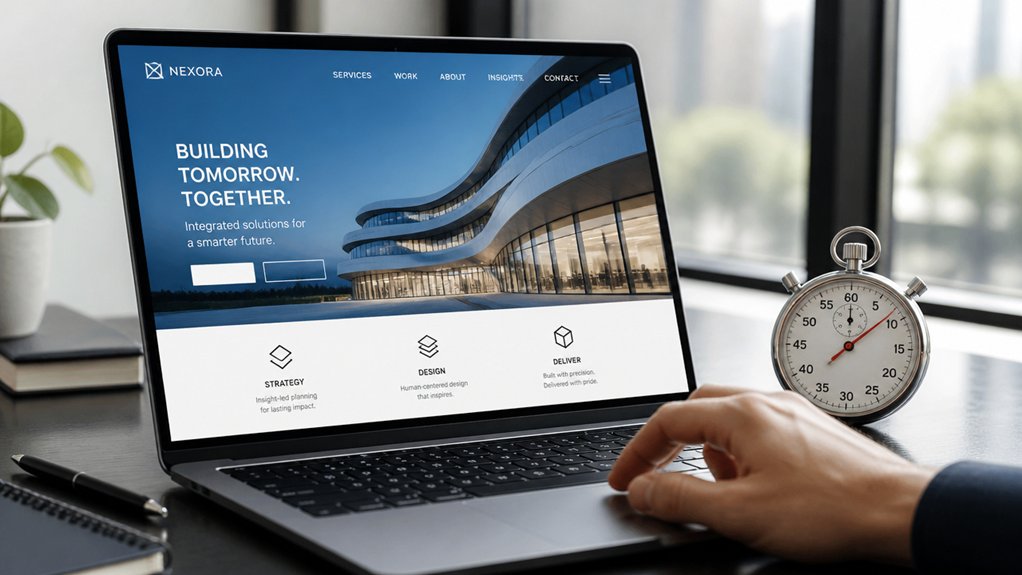
Although you have only a few seconds to earn attention, your website can communicate exactly what you do, who it’s for, and why it matters in under 10.
Lead with a specific headline that matches high-intent search terms your buyers use, then support it with a one-sentence value proposition.
Use visual clarity: strong hierarchy, one primary CTA, and scannable sections so users don’t hunt for meaning.
Keep concise messaging: cut jargon, name outcomes, and define your niche (industry, location, problem).
Align above-the-fold copy with your top keywords, but write for humans first.
Validate clarity with behavior data: track scroll depth, bounce rate, and CTA clicks; iterate until most visitors act quickly.
Test on mobile first.
Build Trust With Reviews, Badges, and Case Studies
When a new visitor lands on your site, they’re scanning for proof you deliver—not promises. Put Customer testimonials near your primary call-to-action, and show specifics: results, timelines, and the customer’s role or industry.
Aim for a mix of short quotes and longer reviews so skimmers and deep readers both get value.
Reinforce credibility with Trust badges where risk feels highest: checkout, contact forms, pricing pages, and demo requests. Use only badges you’ve earned (payment security, memberships, certifications), and link them to verification pages when possible.
Then add 1–3 case studies that read like mini-stories: problem, approach, measurable outcome, and a screenshot or metric. Include real names and photos when clients approve.
Keep proof current; outdated reviews reduce confidence fast.
Help Your Website Show Up on Google (SEO Basics)
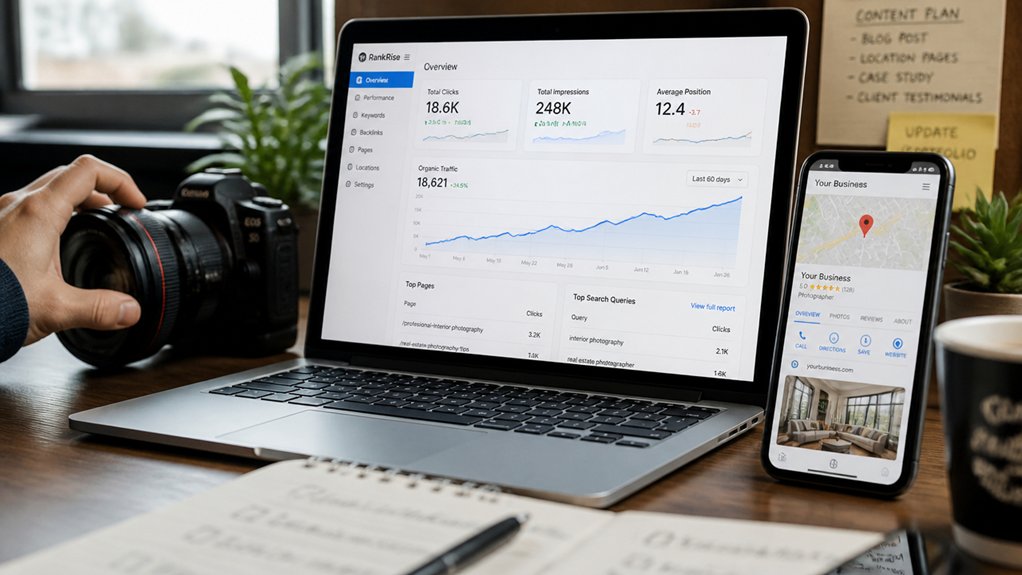
Because most buying journeys start with a search, your website needs a clear SEO foundation to earn visibility on Google and attract high-intent traffic.
Start with Keyword research that maps queries to intent: informational, comparison, and transactional. Prioritize terms with solid volume, achievable difficulty, and a clear path to conversion.
Then, build one focused page per topic cluster. Write titles and meta descriptions that match search language, and use clean headings so Google and readers scan fast.
Strengthen internal links to guide users to next steps and help crawlers understand hierarchy.
Track rankings, clicks, and conversions in Search Console and analytics to find gaps.
Finally, invest in backlink strategies: earn links from partners, local directories, and reputable publications with helpful, shareable resources.
Speed Up Your Website on Mobile (Core Web Vitals)
Three Core Web Vitals—Largest Contentful Paint (LCP), Interaction to Next Paint (INP), and Cumulative Layout Shift (CLS)—largely determine whether your mobile site feels fast, stable, and responsive, and they directly influence SEO outcomes like rankings and click-throughs.
For Mobile optimization, target LCP under 2.5s by compressing images, serving WebP/AVIF, preloading your hero asset, and using a CDN.
Improve INP (aim under 200ms) by trimming JavaScript, deferring noncritical scripts, and breaking long tasks so taps register instantly.
Reduce CLS (keep under 0.1) by reserving space for images/ads, avoiding late-loading fonts, and using steady layouts.
Validate gains in PageSpeed Insights and Search Console’s Core Web Vitals report, then monitor real-user loading speed via CrUX data.
Convert Visitors With Better CTAs, Forms, and Tracking
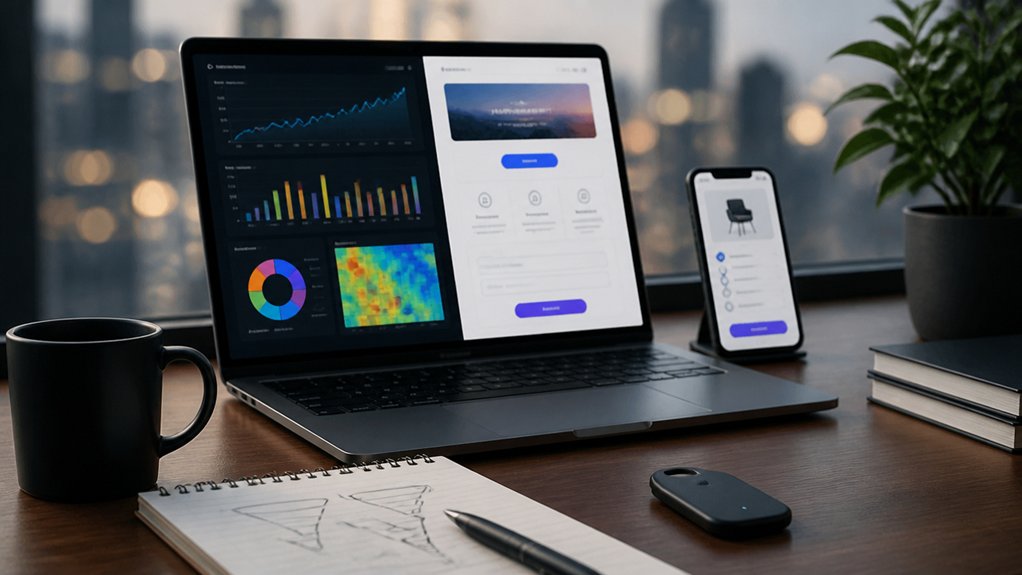
Even if your traffic climbs, you won’t grow revenue unless the page tells visitors exactly what to do next and makes it effortless to do it. Use call to action strategies that match intent: “Get a Quote” on service pages, “Book a Demo” on product pages, and one primary CTA per screen.
A/B test copy, button color, and placement, then keep winners that lift click-through and lead rate.
Next, apply form optimization techniques: cut fields to the minimum, group related inputs, enable autofill, and show inline validation to reduce errors.
Add trust signals near the submit button and confirm with a fast thank-you page.
Track everything with events for CTA clicks, form starts, field drop-offs, and submissions, so you fix leaks with evidence.
Conclusion
Your website shouldn’t feel like a dim storefront on a busy street—it should shine like a well-lit window that pulls people in. When you clarify your message in 10 seconds, back it with reviews and case studies, and target the right keywords, you earn clicks and trust. Improve Core Web Vitals so mobile visitors don’t bounce. Then tighten CTAs, simplify forms, and track conversions so every visit leaves measurable footprints.
About the Author