

If you run a property repair business in the UK, you can’t rely on word of mouth alone. You need a good web presence that ranks locally, loads fast on mobile, and turns visitors into calls. Clear service pages, strong trust signals, and a well-managed Google Business Profile help you win work in competitive postcodes. The problem is most sites miss the basics that cost you leads, and it starts with a simple checklist…
Key Takeaways
- Claim and optimise your Google Business Profile with correct UK service areas, categories, hours, and recent job photos.
- Keep NAP details consistent across your website and directories like Yell and Checkatrade to strengthen local SEO.
- Build clear, location-specific service pages that explain problems, fixes, and include strong click-to-call and booking calls-to-action.
- Make your site mobile-first and fast, passing Core Web Vitals with compressed images, caching, and lightweight design.
- Increase trust with transparent pricing, insurance and accreditations, verified reviews, and before-and-after galleries.
Start With This Property Repair Web Presence Checklist
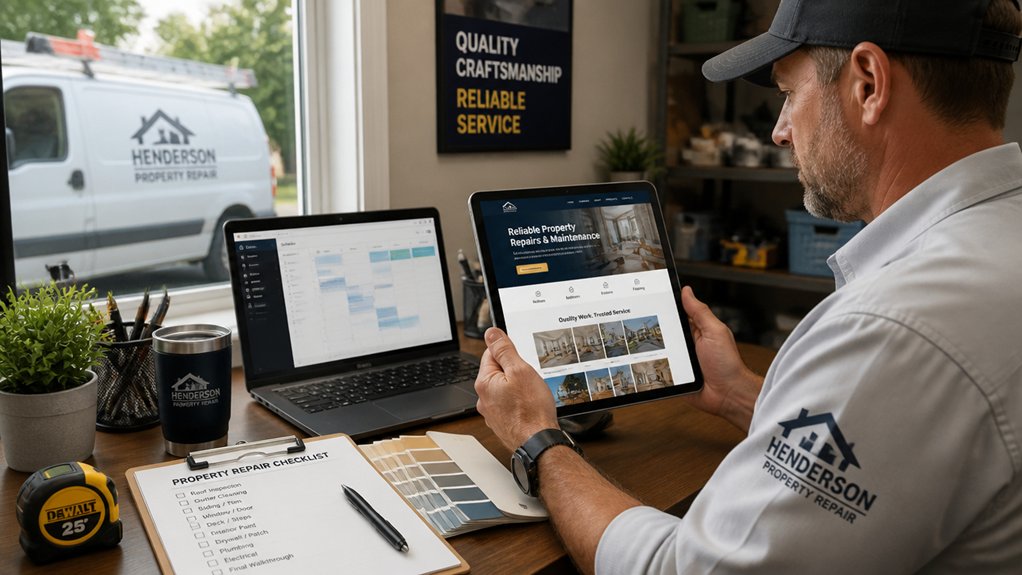
Before you invest in ads or chase more leads, you need to make sure your property repair business has the essentials in place online. Start by claiming and polishing your Google Business Profile with UK service areas, categories, and fresh photos.
Then align your NAP details across directories like Yell and Checkatrade for local SEO consistency.
Add clear service pages for damp proofing, plastering, roofing, and emergency call-outs, each with location terms (e.g., “in Leeds”).
Publish transparent Pricing strategies: typical ranges, what affects cost, and how quotes work.
Showcase trust signals—accreditations, insurance, before-and-after galleries, and verified reviews.
Finally, set up Customer retention basics: a follow-up email template, review requests, and a simple newsletter offering seasonal maintenance tips and reminders.
Track enquiries in one system.
Build a Fast Mobile Site That Converts Calls
Once your Google Business Profile, NAP listings, service pages, and reviews line up, your website needs to turn that attention into booked jobs. Most homeowners search on mobile, often during a leak, break-in, or storm, so speed matters.
Prioritise Mobile optimization: compress images, enable caching, use a lightweight theme, and pass Core Web Vitals so pages load in under two seconds on UK networks.
Make calling effortless with strong Call to action design: a sticky “Call now” button, click-to-call numbers, and concise trust signals like badges, hours, and response times.
Keep forms short, minimise pop-ups, and show your service area clearly.
Add structured data for LocalBusiness and track calls with analytics so you can refine what converts.
Write Service Pages That Match Repair Jobs
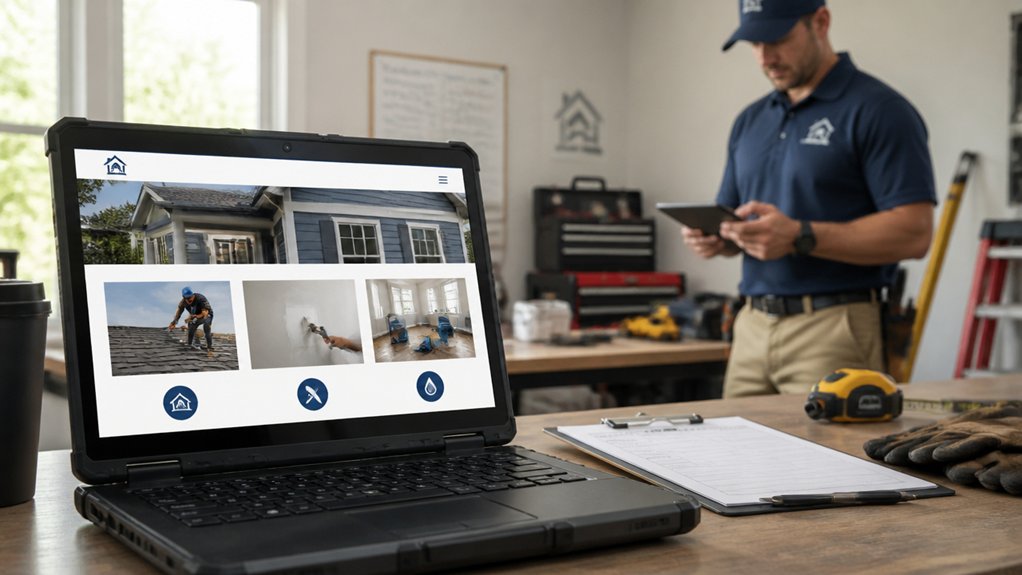
Although your homepage can introduce your business, your service pages win the actual repair jobs by matching the exact terms homeowners type in—“emergency plumber in Leeds”, “uPVC door lock repair”, “storm-damage roof patch”.
They do this by proving you can handle that specific problem fast. Build one page per job type and spell out symptoms, causes, and your fix process in plain UK language.
Add trust signals: guarantees, insurance, accreditations, and before/after photos.
Use clear Pricing strategies: call-out fees, fixed-price bands, or “from” rates with what’s included, so callers self-qualify.
Finish with strong calls to action: click-to-call, WhatsApp, and a short booking form.
Add aftercare tips and maintenance plans to drive Customer retention and repeat work year-round.
Get Found on Google for Local Property Repair
How do you make sure your business shows up when someone nearby searches “boiler repair near me” or “emergency electrician in Manchester”? You’ll need Local SEO that signals clearly where you operate and what you fix.
Start by claiming and completing your Google Business Profile with accurate NAP details, service areas, opening hours, and categories.
Then optimise your site with location-focused headings, title tags, and schema markup, plus clear internal links from your homepage to each repair service page.
Create dedicated pages for each town or borough you cover, using natural UK terms like “call-out” and “same-day”.
Keep your contact details consistent across directories.
Finally, add fast-loading mobile pages and click-to-call buttons to improve Customer Engagement and conversions today.
Use Reviews and Before-After Photos to Win Trust
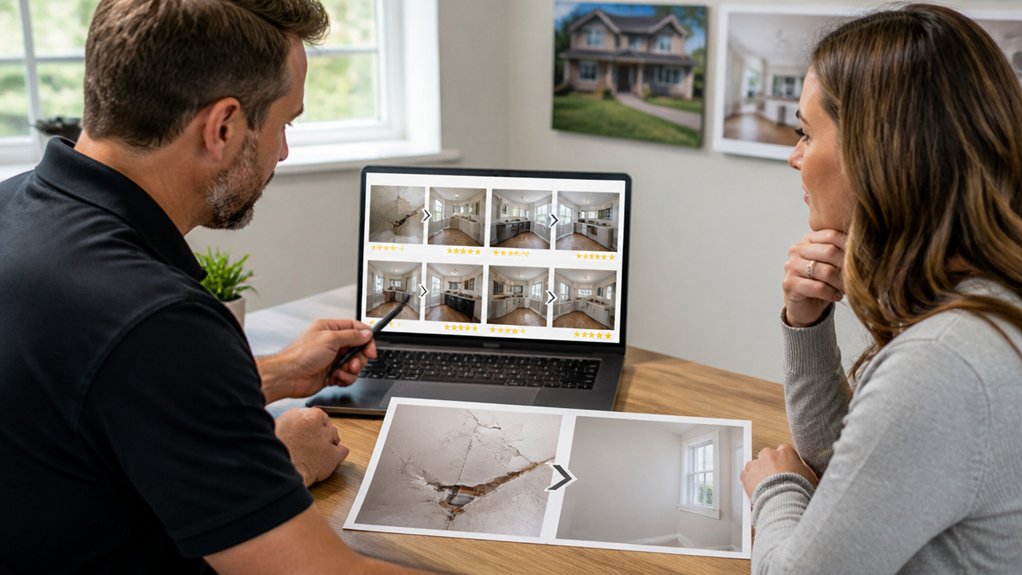
Because most customers can’t judge workmanship until the job’s done, you need trust signals that land fast—recent Google reviews and clear before-and-after photos on your website. Feature your best Customer testimonials beside each service page (leaks, plastering, damp repairs) and include the customer’s first name, town, and job type to boost local relevance across the UK.
Pull in star ratings, respond to feedback, and keep reviews fresh so prospects see you’re active and reliable.
Build a Visual portfolio with consistent angles, good lighting, and short captions explaining the problem, materials used, and finish standard. Show timelines and tidy work areas to reduce perceived risk.
When visitors recognise similar homes and issues, they’ll trust your pricing and choose you quicker.
Add Click-to-Call, Forms, and Online Booking Fast
When a homeowner finds a leak or damp patch, they won’t dig around your site—they’ll call the first property repair business that makes it easy. Put a click-to-call button above the fold on mobile, and make your phone number tap-ready on every page, including service areas across the UK.
Add a short enquiry form with clear options (emergency, damp, plaster, roofing) so you capture details fast and route leads correctly.
Offer online booking with Scheduling automation to confirm slots, send SMS/email reminders, and reduce no-shows. Connect bookings to your calendar and job system so you don’t double-book.
Improve Customer engagement by showing instant confirmation, transparent response times, and follow-up links for photos or videos. The result: more enquiries, faster conversions, and fewer missed calls.
Conclusion
If you want your property repair business to win more local work, you’ve got to show up and convert fast. Use the checklist, build a quick mobile site, and publish service pages that match real repair jobs. Optimise your Google Business Profile for UK searches, then back it up with reviews and before-and-after photos. Add click-to-call, simple forms, and online booking—like a well-stocked toolbox, each element helps you secure leads.
About the Author