
Your online presence is your shopfront window on the high street. If you keep your branding consistent, display clear UK contact details and policies, and back claims with recognisable trust signals, you’ll reduce doubt fast. Place testimonials where decisions happen, and make sure your site loads quickly, stays secure, and works on mobile. When you respond promptly and plainly, visitors start to believe you’re the real thing—but most businesses miss one key step…
Key Takeaways
- Clear contact details, legal information, and transparent policies signal legitimacy and reduce perceived risk for UK customers.
- Consistent branding across website, email, and social profiles looks established and prevents confusion about who you are.
- Fast, secure, mobile-friendly sites show professionalism, protect users, and increase confidence during enquiries and payments.
- Specific, recent testimonials and independent reviews provide proof of results and validate your claims.
- Credibility badges and industry affiliations, explained in plain English, reassure visitors you meet recognised standards.
Audit the Trust Signals in Your Online Presence

Before you ask customers to trust you, audit what your website, emails, and social channels already communicate about your credibility.
Start with the basics UK buyers expect: clear contact details, Companies House information where relevant, transparent pricing, and up-to-date policies.
Check that your site loads quickly, looks secure, and uses consistent professional email domains.
Review testimonials for specificity, recency, and permission, and prioritise independent reviews on platforms your audience recognises.
Scan social feeds for unanswered complaints, vague claims, or outdated offers that weaken your online reputation.
Then assess proof points: case studies, accreditations, GDPR and cookie compliance, and plain-English service guarantees.
Treat this as one of your core Trust building strategies, and re-audit quarterly as you scale operations.
Keep Your Branding Consistent Across Your Online Presence
Although your offer might be strong, inconsistent branding across your website, emails, social profiles, and listings makes UK customers hesitate because it signals disorganisation and risk. You can’t build trust if every touchpoint looks like a different company.
Lock in your Brand identity: choose one name format, tone of voice, logo usage, and colour palette, then apply them everywhere. Prioritise Visual consistency across headers, profile images, email signatures, and directory photos, so customers recognise you instantly.
Align key details too—address style, opening hours, phone numbers, and service descriptions—because small mismatches trigger doubt and failed callbacks. Use a simple brand kit and a checklist for anyone who publishes content on your behalf.
When your presentation matches across channels, you reduce friction, look established, and earn confidence faster.
Add Credibility Signals to Key Website Pages
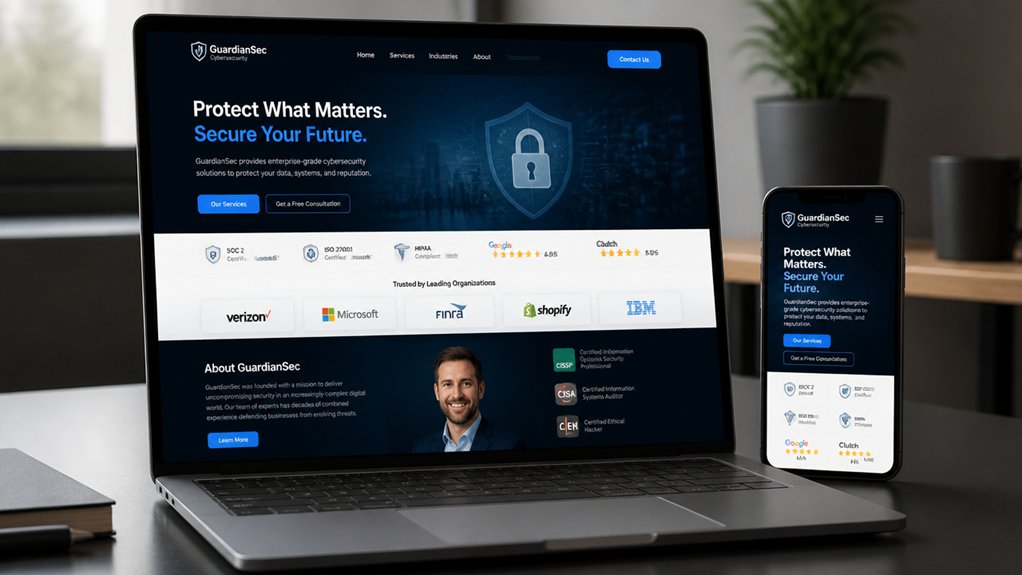
If your website asks people to call, book, or pay, you need to prove you’re a safe choice the moment they land on key pages like your homepage, services, pricing, and contact.
Add credibility signals that answer UK buyers’ risk questions fast: who you are, where you’re based, and how you’re regulated. Display your registered address, Companies House number, VAT number (if relevant), and clear trading name.
Use Authority badges that matter in Britain—Cyber Essentials, PCI DSS, ICO registration, or sector bodies like NICEIC, Gas Safe, or FCA permissions. Pair them with plain-English explanations, not jargon.
Include Expert testimonials from recognised professionals or accredited partners, with names, roles, and verifiable organisations. Keep them current and consistent site-wide.
That’s trust built into every decision point.
Put Social Proof Where Visitors Will See It
Credibility signals show you’re legitimate; social proof shows other people have taken the risk and felt good about it. Put it where decisions happen: above the fold on your homepage, beside pricing, and directly on key service pages.
Use short, specific User testimonials with names, roles, and outcomes, not vague praise. Place them next to the claim they validate—“response times”, “quality”, “ROI”—so visitors connect proof to promise.
Add sector-relevant Expert endorsements from recognised UK bodies, industry publications, or respected practitioners, and link to the source where appropriate.
Don’t hide reviews on a standalone page; weave them into enquiries, quote requests, and booking journeys. When you pair proof with each conversion step, you reduce perceived risk and move visitors from scepticism to action.
Make Your Website Fast, Secure, and Mobile-Friendly
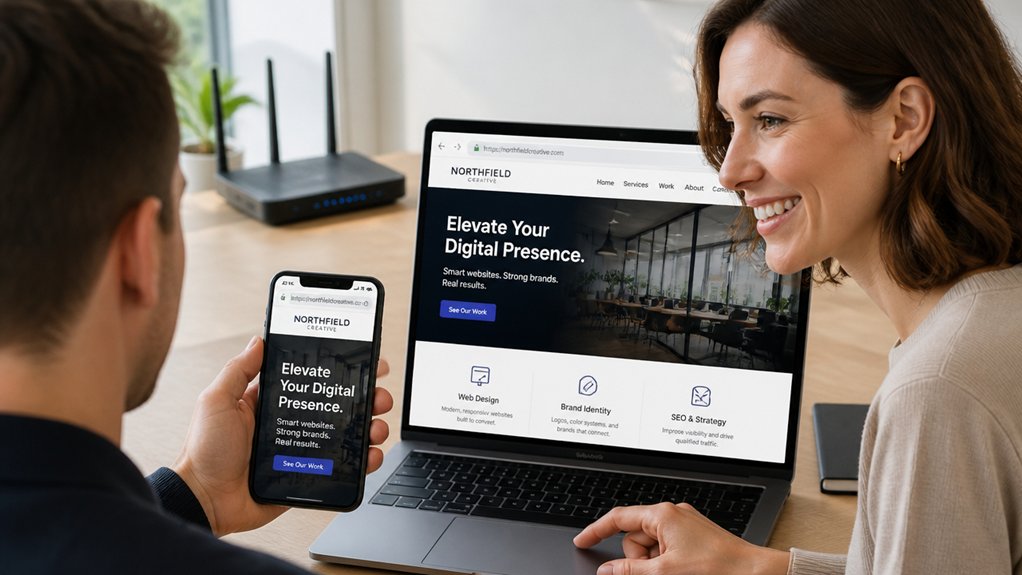
Because visitors judge you in seconds, your site needs to load fast, feel secure, and work flawlessly on mobile—or you’ll lose enquiries before they ever read your offer.
Prioritise Website speed by compressing images, using modern formats, minimising scripts, and choosing UK-based hosting or a CDN with UK edge nodes to cut latency.
Trust also hinges on visible protection. Run HTTPS everywhere, harden logins with MFA, keep plugins and themes patched, and add a web application firewall—practical Cybersecurity measures that reduce fraud risk and reassure cautious buyers.
Don’t neglect mobile: use responsive layouts, tap-friendly buttons, readable typography, and frictionless checkout on small screens.
Test with Core Web Vitals and real-device journeys to guarantee every page feels effortless and credible in the UK market.
Communicate Clearly and Respond Quickly Online
How quickly can a buyer understand what you do, what it costs, and how to reach you? If they can’t, they’ll click away and choose a competitor.
You build trust by writing plain-English service pages, stating pricing or clear ranges, and showing delivery times, returns, and guarantees up front.
Use consistent contact options—phone, email, and live chat—and set expectations with published response times. Then meet them: reply within hours, not days, especially on Google Business Profile and social channels.
Treat Customer feedback as proof, not noise: acknowledge issues, fix them, and document outcomes.
Keep your transparency practices visible, from complaint handling to data use and cookies, aligned with UK consumer standards and GDPR.
Conclusion
When your online presence looks sharp, you don’t just earn trust—you almost make scepticism impossible. Audit every trust signal, keep branding relentlessly consistent, and stack credibility on your key pages like you’re building Fort Knox. Put social proof where eyes land first, not buried in a footer. Make your site lightning-fast, locked down, and flawless on mobile. Then communicate clearly and reply quickly—because in the UK, silence screams “dodgy.”
About the Author