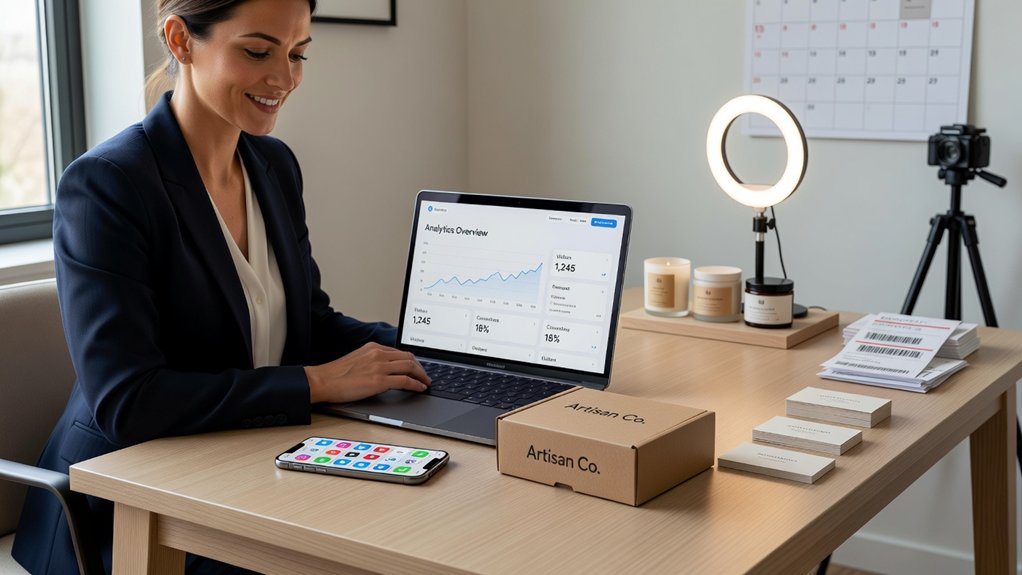
If you want a strong online presence for your small business in the UK, you’ve got to start with a clear offer and a simple positioning statement that customers instantly get. Then you build a fast, mobile-first website that guides people to enquire, book, or call, and you track what’s working. You’ll also claim your Google Business Profile, earn reviews, and pick two social channels you can show up on consistently—but that’s only the start.
Key Takeaways
- Define your brand, target customer, and unique value, then package clear offers with simple pricing, timelines, and risk reducers.
- Build a fast, mobile-first website with benefit-led copy, one primary CTA per page, and trust signals like testimonials and FAQs.
- Set up tracking from day one: analytics, conversion goals, event tracking, and UTM links to measure enquiries, calls, and bookings.
- Optimise local visibility via Google Business Profile, consistent UK citations, fresh updates, and a steady review collection and reply process.
- Focus on 1–2 social platforms where your audience is, post helpful proof-led content, and measure success by leads and clicks, not followers.
Nail Your Small Business Brand and Offer
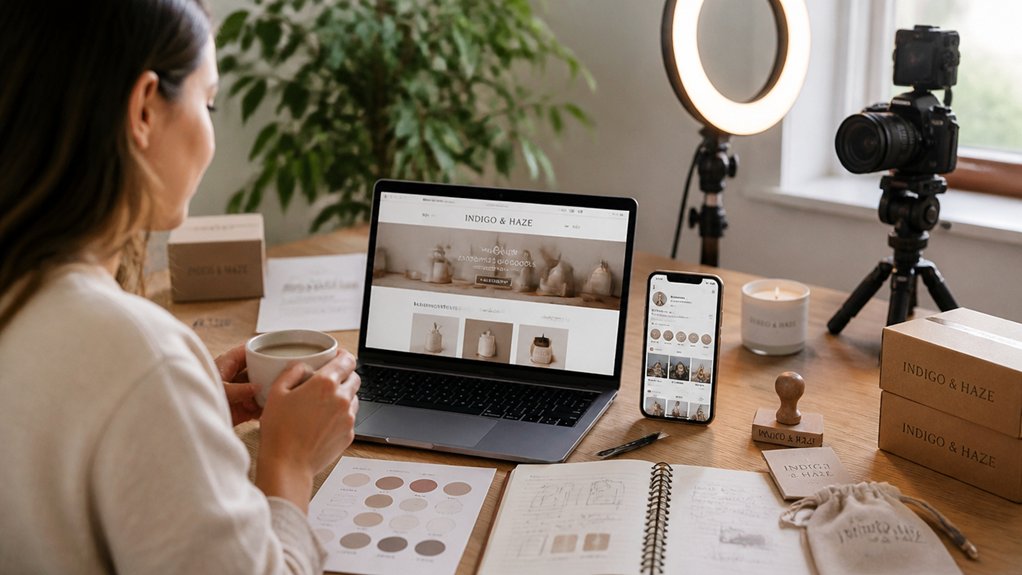
Before you build a website or post on social media, you need to nail your small business brand and offer—because clarity here makes every online decision faster and more effective.
Start by defining who you serve in the UK, the problem you solve, and the outcome customers can expect.
Then sharpen your Unique value: what you do better, faster, or more reliably than local competitors, and why it matters in pounds, time, or peace of mind.
Write a one-sentence positioning statement you can reuse across listings, profiles, and ads.
Lock in Brand consistency by choosing a tone, promise, and visual style you’ll stick to everywhere.
Finally, package your offer into clear options with simple pricing cues, delivery timelines, and risk reducers such as guarantees or consultations.
Build a Small Business Website That Converts and Tracks
With your brand and offer locked in, your small business website becomes the place where UK customers decide to contact you, book, or buy.
Keep pages fast, mobile-first, and accessible, with clear headlines, benefit-led copy, and one primary call to action per page to lift conversions.
Prioritise intuitive website design: simple navigation, scannable sections, trust signals like testimonials, and transparent pricing or next steps.
Boost user engagement with click-to-call, enquiry forms, live chat, and concise FAQs that remove friction.
Track what matters from day one: install analytics, set up conversion goals for calls, forms, and purchases, and add event tracking for key buttons.
Use UTM-tagged links for campaigns so you can measure ROI and iterate quickly.
Grow Your Small Business Online Presence With Local SEO (GBP + Reviews)

Even if your website converts well, you won’t win consistent enquiries in the UK unless you show up when locals search “near me” on Google. Start by claiming and fully completing your Google Business Profile: accurate NAP, service areas, opening hours, categories, and high-quality photos. Add products or services, FAQs, and regular updates to signal relevance.
Build Local citations across trusted UK directories (Yell, Thomson Local, Yelp, Bing Places) and keep details identical to avoid confusing Google.
Then focus on reviews: ask every happy customer, share a direct link, and reply to all feedback within 24–48 hours. Your responses boost Customer engagement, add keywords naturally, and reassure prospects.
Track calls, messages, and direction requests to refine what works.
Choose the Best Social Platforms for Your Small Business
Where should your small business show up on social media to win real customers, not just likes? Start with where your UK buyers already search and message.
If you’re local and service-led, prioritise Facebook and Instagram for community reach, click-to-call actions, and location targeting.
If you sell premium or B2B, use LinkedIn to reach decision-makers in your region and niche.
If you’re product-led and visual, test TikTok and Pinterest for discovery, but only if you can manage replies fast.
Track results with social media analytics: measure enquiries, bookings, and website clicks, not follower count.
Keep platforms tight—two core channels beat five neglected ones.
Add influencer partnerships only when the audience matches your postcode, price point, and values.
Create Content That Builds Trust and Brings Customers Back
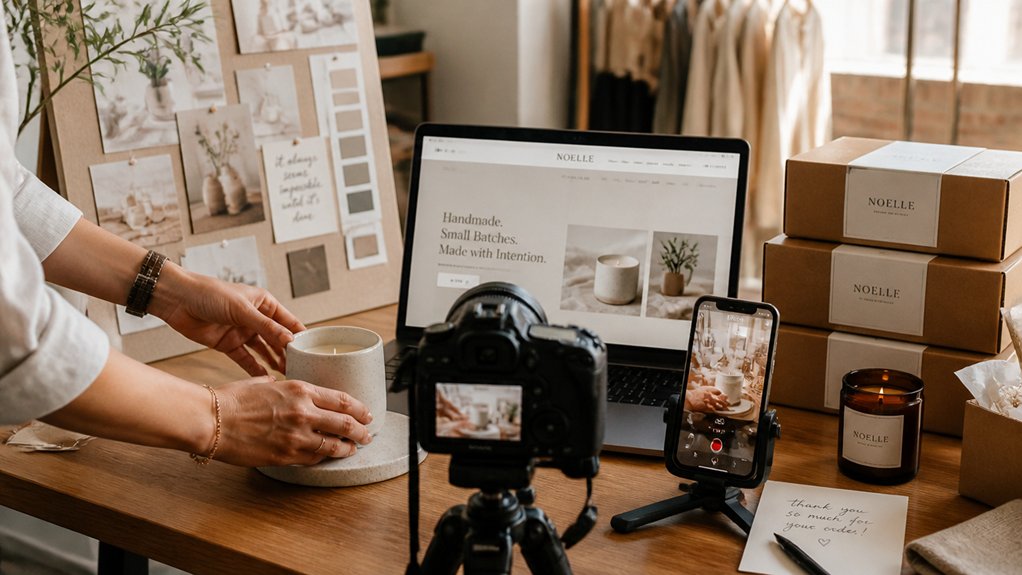
Because trust drives repeat custom in the UK, your content should prove you’re reliable before you pitch anything. Share clear prices, delivery times, and returns, and back claims with photos, reviews, and short case studies from real customers.
Lead with Content authenticity: show your team, your process, and what happens when something goes wrong—and how you fix it fast. Publish helpful how‑tos and local advice that match what people search (e.g., “same‑day repairs in Leeds” or “eco cleaners in Bristol”).
Keep posts consistent across your website, Google Business Profile, and socials to reinforce credibility. Invite Customer engagement with quick polls, FAQs, and comment replies within 24 hours.
Finish with a simple next step—book, call, or visit—so customers come back.
Conclusion
You’ve now got the roadmap to a stronger online presence for your small business in the UK. When you sharpen your brand and offer, you stop blending into the background noise. When you build a fast, mobile-friendly website, you turn casual visitors into warm leads. By polishing your Google Business Profile, collecting reviews, and securing local citations, you light up on local search. Choose two social platforms, then share helpful, human content that keeps customers coming back.
About the Author