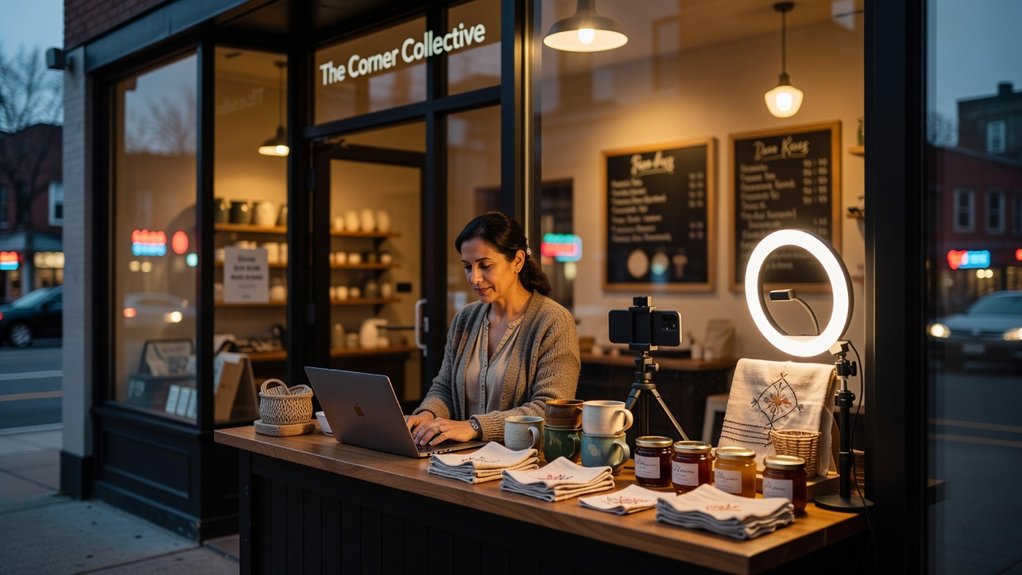
You don’t need a big budget to win online—you need a clear local brand promise and consistent digital signals that Google and customers can trust. In the UK, most high-intent clicks come from local search and Google Business Profiles, so your logo, tone, NAP details, and reviews must match everywhere and prove value fast. When you track calls, direction requests, and bookings, you’ll see what’s working… and what’s costing you.
Key Takeaways
- Define a one-line local brand promise with location, timeframe, and measurable outcome to boost relevance and conversions.
- Build a simple digital branding kit (logo, colours, fonts, tone) and use it everywhere for instant recognition.
- Keep GBP, website, socials, and directories consistent in NAP, categories, photos, hours, and messaging to build trust.
- Use reviews and testimonials as proof; respond within 24 hours with specific local details and a consistent brand voice.
- Track ROI with GBP Insights and GA4 (calls, directions, form fills) and refine offers, creatives, and hours based on data.
Write Your One-Line Local Brand Promise
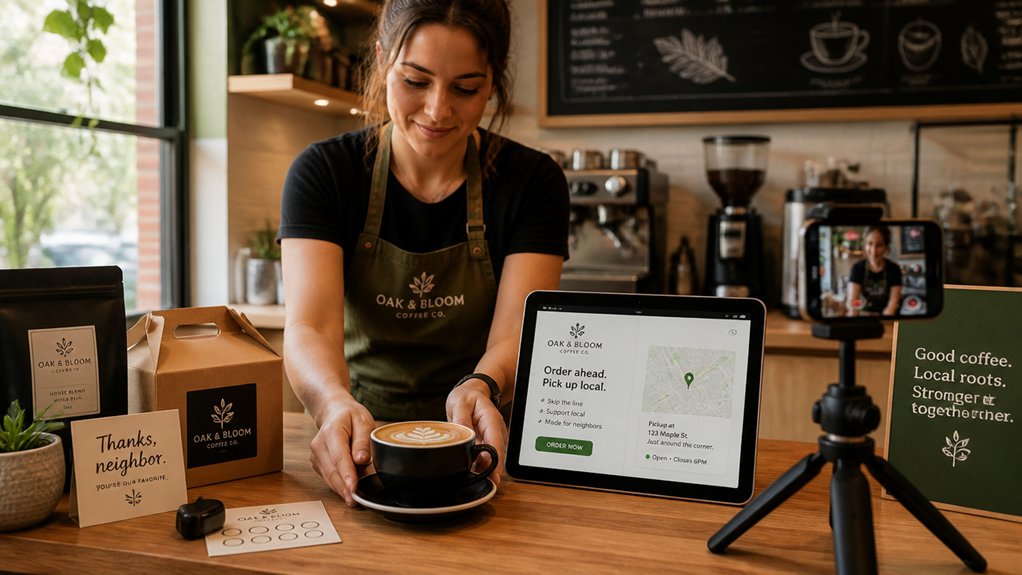
While your competitors chase clicks with generic slogans, you can win local search and conversions by stating a one-line brand promise that’s specific to your area, your customer, and the outcome you deliver.
Make it measurable: “Same-day boiler repair across Leeds, fixed-first-time or you don’t pay the call-out.” This clarity boosts relevance for “near me” queries and raises enquiry rates because buyers know exactly what they’ll get.
Pull proof from your local market: average response time, postcode coverage, Trustpilot rating, or warranties.
Keep it customer-first, not feature-first: outcome, timeframe, location, and risk reversal.
Then use brand storytelling in one sentence: name the local problem, your promise, and the result.
Test two versions on landing pages and calls-to-action, track conversion lift.
Build a Simple Digital Branding Kit (Logo, Colors, Voice)
Because people decide in seconds whether to trust a local business, you need a simple digital branding kit—logo, two to three core colours, and a clear tone of voice—that stays consistent across your Google Business Profile, website, Facebook, and directories.
Keep your logo legible at 48px, so it works on mobile search where most UK local discovery happens.
Pick one primary colour, one neutral, and one accent, then define exact HEX codes to prevent “almost the same” shades that dilute recall.
Lock in your Visual identity with two fonts: one for headings, one for body copy.
Next, script Brand messaging: a 10-word tagline, three proof points (e.g., “NHS discount”, “same-day quotes”), and five do/don’t voice rules.
This speeds content creation and improves conversion consistency.
Apply Digital Branding Across Google, Socials, and Listings
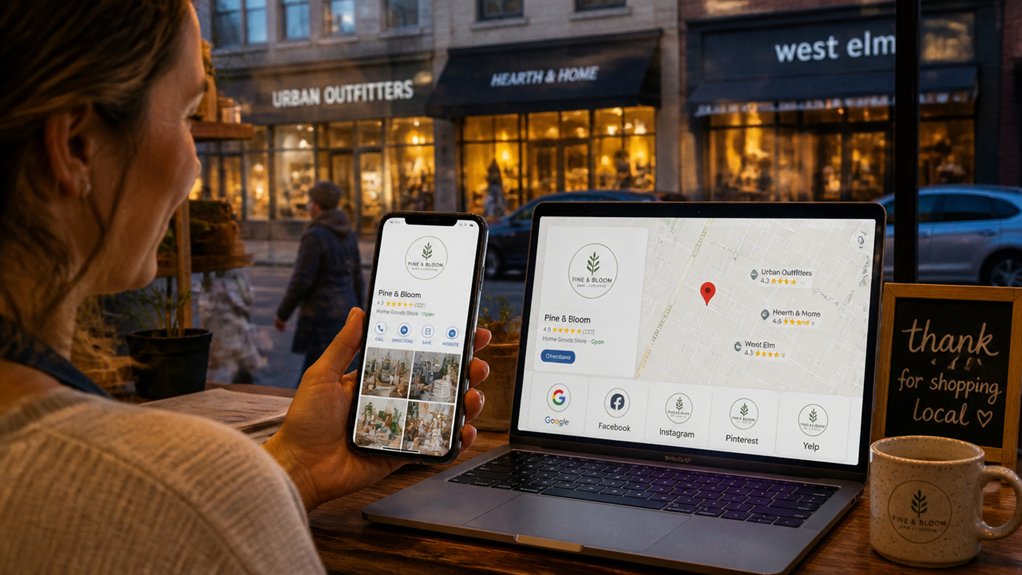
To compete locally in the UK, you’ve got to keep your Google Business Profile consistent—name, address, phone number, categories, photos, and offers should match your branding kit exactly.
When your socials and directory listings use the same logo, colours, tone, and service wording, you cut confusion and improve trust at the moment customers compare options.
That consistency drives more clicks, calls, and direction requests because people can recognise you instantly and act faster.
Google Profile Consistency
If your Google Business Profile doesn’t match what people see on your website, socials, and UK directory listings, you’ll bleed trust—and clicks. In UK local search, consistency signals legitimacy; mismatched names, categories, hours, or phone numbers increase drop-offs before a call or direction request.
Audit your GBP monthly: exact trading name, primary category, service areas, holiday hours, and a trackable phone number. Upload photos that mirror your visual identity—signage, uniforms, vans, and storefront—so people recognise you instantly in Maps results.
Keep offers and services aligned with your site pricing and wording to reduce “bait-and-switch” suspicion. Use UTM links on your website button to measure conversions in GA4 and optimise what drives calls.
Unified Social Listing Branding
Why do so many UK locals click away before they call? Because your name, logo, photos, and tone don’t match across Google, Facebook, Instagram, Apple Maps, Bing Places, and key directories. When details clash, trust drops and competitors win the tap.
Fix it with unified social listing branding. Lock Brand consistency: identical business name, address, phone, opening hours, categories, and service areas everywhere. Then standardise your Visual identity: one logo file set, one colour palette, one photo style, and consistent cover images.
Use the same value proposition and CTA in bios and listing descriptions, and link to one tracked booking or call page. Audit monthly, correct duplicates, and reply to reviews in one voice. You’ll lift clicks, calls, and footfall reliably.
Make Your Website Prove Your Brand Promise Fast
Although most visitors decide within seconds whether to stay or bounce, many local sites still make people hunt for proof. You can’t afford that: UK users expect instant reassurance on mobile. Put your promise above the fold in plain English, then back it with Visual storytelling—real team photos, before/after jobs, short clips, and trust marks.
Add a tight “Why choose us” block: response times, guarantees, pricing approach, and service area.
Drive conversions with Content personalization: show different hero messages for homeowners vs. landlords, returning vs. new visitors, or by time of day. Use one primary CTA, repeat it after proof points, and add click-to-call.
Track scroll depth and CTA taps; cut anything that doesn’t lift enquiries.
Boost Local SEO With Digital Branding Signals (GBP, NAP, Schema)
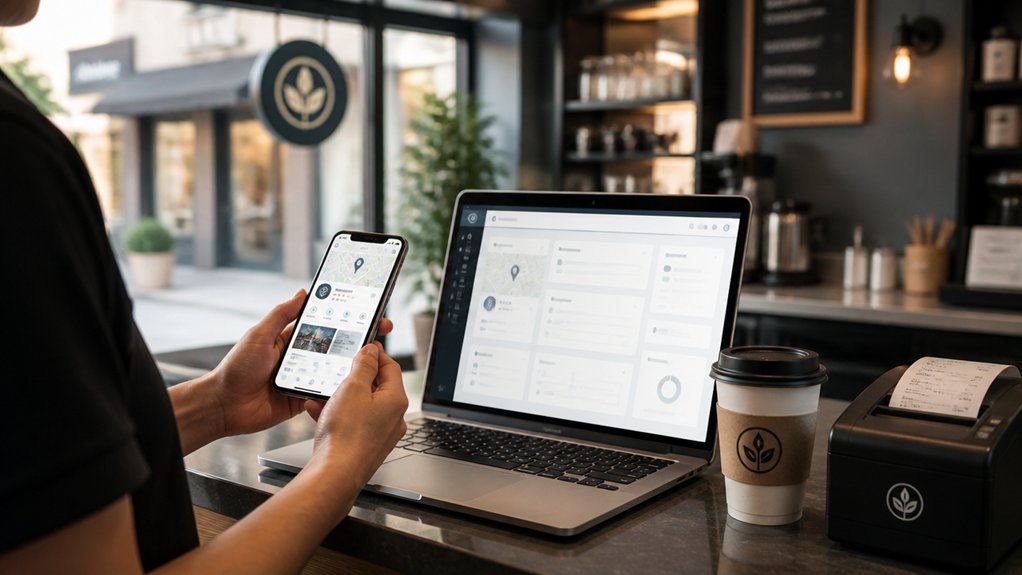
Your website can earn the click, but Google still needs consistent branding signals to rank you in the local pack and Maps, where many UK searches end with a call. Start with your Google Business Profile: choose primary categories, add services, and upload photos that match your visual identity so searchers recognise you instantly.
Then lock down NAP (name, address, phone) everywhere: website footer, GBP, directories, socials. One mismatch can dilute trust and reduce map visibility. Use the same trading name and local number, and standardise abbreviations (St vs Street).
Add LocalBusiness schema with opening hours, geo, service area, and “sameAs” links to reinforce Brand consistency. Track impact in GBP Insights: calls, direction requests, and website clicks, and optimise what drives enquiries most.
Turn Reviews Into Digital Branding Trust and Clicks
You can turn reviews into measurable trust signals by pushing your star ratings across your Google Business Profile, website snippets, and UK directory listings to lift click-through.
You should also showcase short social proof stories—before/after results, turnaround times, and real customer quotes—so prospects see proof, not promises.
When you respond publicly, you protect conversion: thank happy customers, address issues with specifics, and show you’ll fix problems fast without getting defensive.
Leverage Star Ratings Everywhere
When potential customers compare local options online, star ratings often decide the click before they’ve read a single word. In the UK, shoppers scanning Google Business Profiles, Apple Maps, Trustpilot, Facebook, and industry directories filter fast; a visible 4.5+ average can lift click-through and calls without changing your offer. Don’t hide it—deploy it.
Add your rating and review count to page titles, meta descriptions, and above-the-fold headers.
Use Schema.org AggregateRating markup so rich snippets can show in Google results.
Place star widgets on service pages, booking flows, and quote forms to reduce hesitation at the decision point.
Keep visuals consistent with your Brand storytelling, and respond promptly to protect Customer loyalty and conversion momentum.
Showcase Social Proof Stories
Three lines of a customer story can outperform a hundred generic testimonials because they answer the buyer’s real question fast: “Will this work for me?”
Turn your best UK reviews into mini case studies—problem, solution, result—and publish them as branded snippets across Google Business Profile posts, service pages, and paid social so prospects see outcomes (time saved, cost avoided, turnaround hit) before they compare on price.
Pick 5–10 reviews that mention location, service, and measurable impact, then rewrite them into scannable “before/after” cards.
Add the reviewer’s first name, town, and service category to boost relevance for “near me” searches.
Use consistent visuals, your logo, and a single CTA (“Get a quote today”) to drive clicks.
This is Brand storytelling with proof, not hype—Customer testimonials that close.
Respond Publicly With Care
Although a review response takes under two minutes to write, it can influence your click-through rate for weeks because prospects scan your Google Business Profile for proof you’re reliable, local, and responsive.
Reply to every rating within 24 hours, and you’ll signal service standards UK customers expect. Thank them by name, reference the job or product, and add one local detail (area served, delivery window, parking) to reinforce relevance.
For negative reviews, apologise once, state the fix, and move the resolution offline with a direct contact route—never argue. Use consistent tone and phrases to strengthen Brand storytelling across locations.
Ask a simple follow-up question to drive Customer engagement, like “Which option did you choose?” These micro-moments build trust and convert searchers into enquiries and calls.
Track Digital Branding ROI (Calls, Visits, Directions, Sales)
Because your digital brand only matters if it drives measurable action, you should track ROI in the metrics that map directly to local revenue: calls, website visits, direction requests, and sales.
In Google Business Profile Insights, monitor call clicks, website taps, and “Directions” by postcode area to see what converts nearby searchers. Pair this with GA4 to attribute phone calls (via call tracking), form fills, and ecommerce or POS-linked sales to specific pages and campaigns.
Don’t stop at Brand visibility or Engagement metrics like impressions, views, and review interactions—use them as leading indicators, then validate with conversion totals and cost per lead.
Set weekly targets, compare against last month and last year, and adjust creatives, offers, and opening hours to lift calls and footfall across the UK.
Conclusion
You can’t outspend big brands, but you can out-clarify them. In the UK, 98% of consumers read online reviews for local businesses, so your promise, visuals, and messaging have to stay consistent everywhere people check—Google Business Profile, socials, and directories. When your website proves your promise in seconds, and your NAP and schema match, you’ll win more calls, direction taps, and bookings. Track conversions weekly and refine fast.
About the Author