
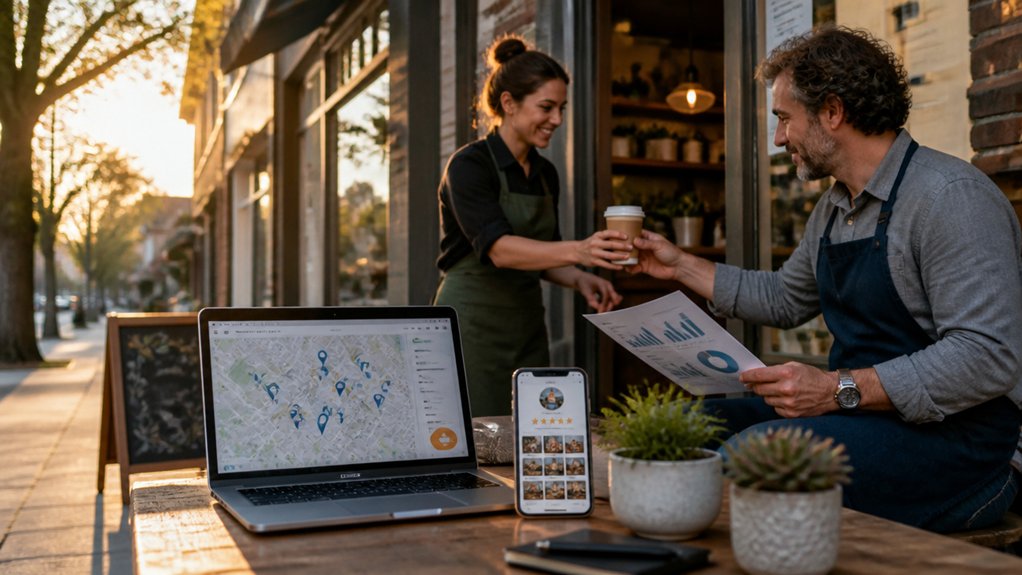
Why do you need local seo services for small business services and websites? If your business is invisible on Google Maps, it’s like opening a shop on a side street with no sign. You’re competing in a UK market where “near me” intent drives high-conversion clicks, yet gaps in your Google Business Profile, NAP consistency, and local pages can quietly bleed leads. Local SEO services fix those issues with measurable actions that lift calls, directions, and bookings—but the real question is which tasks move the needle first for you…
Key Takeaways
- Optimize and manage your Google Business Profile with accurate categories, services, photos, posts, FAQs, and UTM tracking.
- Ensure NAP consistency across your website, directories, social profiles, and listings to strengthen trust and prevent citation splits.
- Research and target “service + area” keywords, clustering by intent and assigning a primary term plus variants to each page.
- Improve on-page local SEO with location-based titles, H1s, internal links, local content, and LocalBusiness schema with hours and service area.
- Build local authority through citation cleanup, review generation and responses, and backlinks from community partners, regional sites, and sponsorships.
What Do Local SEO Services Include?

Because local search results change based on postcode and intent, local SEO services focus on the specific signals Google uses to rank you in the Map Pack and “near me” results—optimising your Google Business Profile, tightening NAP (name, address, phone) consistency across UK directories, targeting local keywords, building location pages, and earning locally relevant links and reviews to drive more calls, direction requests, and bookings.
You’ll also get citation clean-ups, category and service optimisation, photo and product updates, and Q&A management to lift click-through rate. You’ll track conversions with call reporting, UTM-tagged GBP links, and booking goals in GA4, then iterate based on what drives revenue.
Competitor gap analysis, Neighborhood demographics, and Local marketing strategies shape which postcodes you prioritise and what offers you lead with.
Local SEO vs Traditional SEO: What Changes?
If you serve customers in the UK, local SEO changes your targeting from national keywords to postcode- and city-level intent that drives calls, directions, and bookings.
You’ll optimise for different ranking signals too, because Google weighs your Business Profile, NAP consistency, proximity, and reviews alongside your website.
Understanding these geographic targeting differences and local ranking factors helps you prioritise the work that converts searchers nearby into paying customers.
Geographic Targeting Differences
While traditional SEO often targets broad, national keywords, local SEO narrows your visibility to the specific towns, postcodes, and “near me” searches that actually drive footfall and calls in the UK. You’re not competing everywhere; you’re competing where your customers can reach you today, within clear geographic boundaries.
That shift changes your keyword set from generic terms to place-led intent, such as “plumber Leeds LS1” or “accountant Cardiff Bay”.
With a regional focus, you can map services to service areas, prioritise high-value boroughs, and tailor landing pages to local demand patterns. You’ll also align content to local concerns—parking, opening hours, and service radius—so searchers convert faster.
This targeting reduces wasted impressions and increases qualified enquiries.
Ranking Factors And Signals
Although the core SEO fundamentals still matter, local SEO ranking hinges on a different mix of signals that directly affect calls, bookings, and walk-ins in the UK. Google weighs proximity, relevance, and prominence, so you’ll win by tightening your Google Business Profile: correct categories, services, opening hours, photos, and appointment links.
Reviews and responses act like conversion proof; aim for steady velocity, UK-specific phrasing, and clear issue resolution. Citations still matter, but consistency across NAP and local directories beats sheer volume.
Your Localization strategies should add location pages with unique FAQs, embedded maps, and schema (LocalBusiness, service area). Traditional SEO leans on links and content depth; local adds engagement signals—click-to-call, directions, and bookings—driving Local visibility in the map pack.
Google Business Profile Optimization Services (GBP)
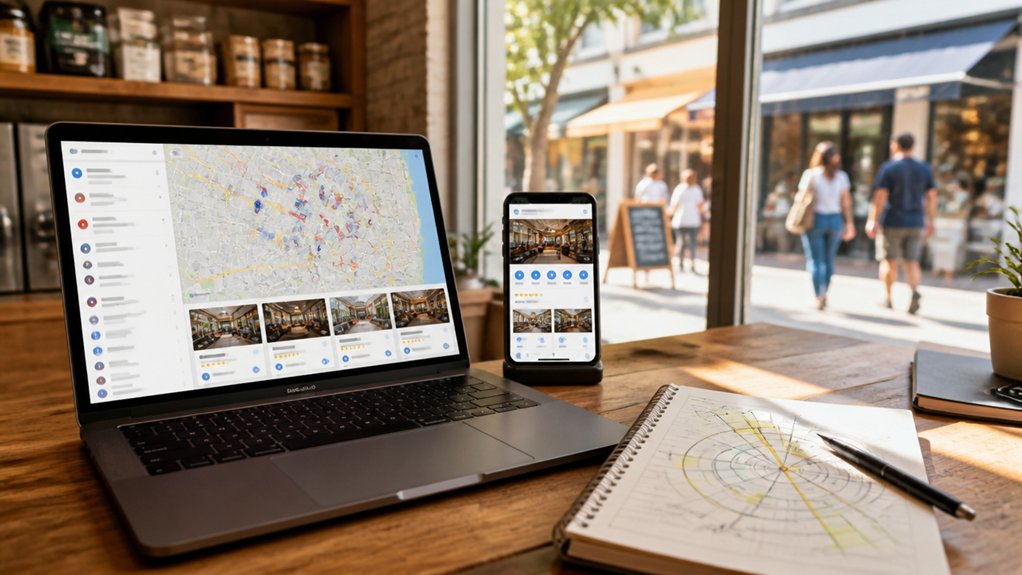
To win more local enquiries in the UK, you’ll optimise your Google Business Profile so you show up for high-intent “near me” searches and map results.
You’ll start with a complete profile setup (NAP, categories, services, opening hours).
Then target local keywords that match how customers in your area actually search.
You’ll also keep momentum with regular Posts and fresh photo updates, giving Google stronger engagement signals and giving prospects more reasons to call, book, or request a quote.
Complete Profile Setup
Because most UK customers now make a quick “near me” decision straight from the map pack, you can’t afford a half-finished Google Business Profile. You should verify ownership, lock in consistent NAP details, choose the right primary and secondary categories, and add opening hours, service areas, and attributes like wheelchair access or “women-led” where relevant.
Upload sharp exterior, interior, team, and product photos; listings with strong imagery typically earn more clicks and direction requests. Write a benefit-led business description, add services/products, and enable messaging and appointment links to lift Customer engagement.
Post weekly offers or updates, seed FAQs, and request reviews with a simple QR code to improve Brand visibility. Every completed field reduces friction and pushes more calls.
Local Keyword Targeting
When you target the right local keywords in your Google Business Profile, you help Google match your listing to high-intent UK searches like “emergency plumber Leeds”, “wedding florist Bristol”, or “accountant near me”.
You’ll map services to specific towns, boroughs, and postcode areas, then weave those terms into your business description, services, and Q&A to lift relevance.
Use Search Console and GBP Insights to prioritise phrases that drive calls, direction requests, and website clicks, not vanity impressions.
Add service-area terms that reflect how people search (e.g., “NW1”, “Manchester city centre”) and align categories tightly with intent.
Support keyword themes with Neighborhood outreach landing pages and consistent Local branding so Google sees clear entity signals.
Done well, you’ll win more qualified leads at lower CPC.
Posts And Photo Updates
Although your categories and keywords set the baseline, regular Google Business Profile posts and photo updates often drive the clicks and calls that turn UK “near me” searches into bookings. Post weekly offers, new services, and seasonal updates with clear CTAs like “Call now” or “Book online” to lift User engagement and reduce drop-offs.
Use UTM-tagged links so you can attribute calls, direction requests, and bookings in GA4 and GBP Insights.
Refresh photos monthly: exterior shots for wayfinding, team photos for trust, and before/after images for proof. Add short captions with your service + town to reinforce relevance without keyword stuffing.
Encourage customers to share your post links for Social sharing, and reply fast to comments to keep momentum.
Local Keyword Research for “Near Me” Buyers
If you want to capture high-intent “near me” searches in the UK, you need keyword research that mirrors how people actually look for local services on Google. Start by pulling Search Console queries and Google Ads Keyword Planner volumes.
Then cluster terms by intent: emergency (“24 hour locksmith”), comparison (“best boiler repair”), and transactional (“book MOT”). Layer in neighbourhood data—postcodes, borough names, and landmarks—because UK searchers often pair “near me” with “in SE1” or “near King’s Cross”.
Next, run competitor analysis: map which queries trigger the local pack, who ranks, and what categories and services they emphasise. Validate demand with seasonal trends (e.g., “boiler repair” spikes in winter) and prioritise keywords that drive calls, directions, and bookings, not just clicks.
Track results weekly in a dashboard.
On-Page Local SEO for Location Pages
On your UK location pages, you’ll convert more local clicks when you target location-specific keywords in the title, H1, copy, and internal links (for example, “boiler repair in Leeds” rather than generic service terms).
You’ll also protect rankings and calls by keeping your NAP and contact details identical across the page, footer, and Google Business Profile.
Add optimised LocalBusiness schema (including address, opening hours, and service area) so Google can verify the location and show richer local results that drive enquiries.
Location-Specific Keyword Targeting
Because Google ties local intent to place names and proximity signals, you’ll win more qualified UK leads when each location page targets the exact “service + area” terms people search (for example, “emergency plumber Leeds” or “accountant in Bristol”) rather than relying on broad, nationwide keywords.
Build your keyword set from Search Console queries, Google Business Profile insights, and paid-search term reports, then map one primary term and 3–5 variants to each page.
Use neighborhood demographics to prioritise high-value postcodes, income bands, and commuter hubs, and adjust messaging to match intent (urgent, same-day, premium).
Run competitor analysis to spot gaps in areas, services, and modifiers like “near me,” “24/7,” or “fixed price.”
Place targets in titles, H1s, intro copy, FAQs, and internal anchors for higher conversions.
NAP And Contact Consistency
A consistent NAP (Name, Address, Phone) across your location page, Google Business Profile, and UK directories acts like a trust signal that helps Google match your business to the right map pin and gives prospects the confidence to call.
Audit every instance of your business name, trading name, suite number, postcode format, and phone prefix, then standardise it everywhere. Even small mismatches (St. vs Street, 020 vs +44) can split citations and reduce local pack visibility.
Put your primary number above the fold, repeat it near the booking form, and verify click-to-call works on mobile.
Keep opening hours, email, and contact CTAs identical across pages for branding alignment and fewer drop-offs.
Track calls and form fills before/after fixes to prove NAP consistency ROI.
Local Schema Markup Optimization
Clean NAP details help Google and customers trust what they see, but you can make that trust machine-readable with LocalBusiness schema on every location page. Add your legal name, UK address format, phone, geo-coordinates, openingHours, and sameAs links to your GBP and key directories to strengthen entity matching.
Treat Local schema as a conversion asset: include priceRange, serviceArea, and hasMap so mobile users tap to call or navigate faster. Use markup optimization to validate in Google’s Rich Results Test and fix warnings that block eligibility.
Mark up reviews only when they’re shown on-page, and keep @id consistent across pages to avoid duplicate entities. Track impact in Search Console: higher local impressions and better click-through rates usually follow within weeks.
Citations and NAP: Keep Listings Consistent
Even if you’re ranking well in Google, inconsistent citations and NAP (name, address, phone number) details can dilute your local signals and cost you leads. In the UK, customers compare Google Business Profile data with directories like Yell, Thomson Local, Apple Maps, Bing Places, and industry portals before they call.
If your suite number, postcode spacing, or phone format varies, you risk lost trust and missed conversions.
Prioritise citation accuracy by auditing your top listings, fixing duplicates, and standardising your legal business name, address line order, and primary number. Maintain NAP consistency across every location page, social profile, and directory entry, then track changes monthly.
Clean citations help Google connect entities, improve map-pack eligibility, and lift call and direction-request rates without extra ad spend.
Review Generation and Response Management
Because Google’s local algorithm leans heavily on prominence signals, your review volume, velocity, ratings, and reply rate can directly influence map-pack visibility and, more importantly, whether UK searchers choose you over a nearby competitor.
Build a predictable review pipeline: trigger SMS or email requests within 2 hours of service, use a short Google review link, and ask one specific prompt tied to Customer feedback (speed, cleanliness, value).
Aim for steady velocity, not spikes; even 4–8 new reviews monthly can move conversion rate in high-intent “near me” queries.
Run Reputation monitoring across Google Business Profile and key UK platforms, and respond to every review within 24–48 hours.
Thank promoters, address issues with a fix and timeframe, and invite offline resolution—then log outcomes to reduce repeat complaints.
Local Link Building From Nearby Websites
Strong reviews win clicks, but nearby links help you win the rankings that generate those clicks in the first place. In the UK, Google weighs local relevance, and links from trusted regional domains can lift your map pack visibility and organic positions.
Focus on quality, not volume: secure mentions from chambers of commerce, local news sites, borough directories, and niche trade bodies.
Build Community partnerships with charities, schools, and business networks, then earn links via joint events, case studies, and resource pages.
Use Local sponsorships for sports clubs or community festivals, but insist on a followable link from the organiser’s site, ideally on a sponsor page with your NAP.
Track uplift by monitoring referral traffic, phone clicks, and direction requests from linked pages.
Keep anchors natural and location-specific.
Monthly Deliverables: What You Get and When
When you’re paying for local SEO each month, you should know exactly what you’ll get, when it lands, and how it ties back to measurable growth in UK calls, form fills, and Map Pack visibility.
In week 1, you’ll get a performance snapshot: rankings by postcode, GBP insights, call tracking, and lead quality notes.
Week 2 delivers on-page fixes and GBP updates, plus a Competitive analysis of top 3 local rivals and the keywords driving their enquiries.
Week 3 focuses on citation cleanup, review replies, and Customer engagement improvements that lift click-to-call and direction requests.
Week 4 wraps with new local content, internal link tweaks, and a plain-English report showing actions completed, wins, and next steps tied to conversions. You’ll also see a task log for accountability, too.
Local SEO Pricing: Packages and Red Flags
Local SEO pricing in the UK ranges from roughly £300–£1,500+ per month, yet the number only matters if it reliably turns into Map Pack visibility, calls, and booked jobs in your target postcodes.
Expect packages to scale by location count, competition, and speed: a single-site trades firm often fits £300–£700, while multi-location or legal/finance commonly needs £900–£1,500+.
Demand Pricing transparency: a clear scope, KPIs (rank in priority grids, GBP actions, call volumes), and reporting cadence.
Push for Service customization around your revenue drivers—service pages, review velocity, citations, and local links—not generic blog quotas.
Red flags: “guaranteed #1,” hidden setup fees, locked-in 12-month terms, PBN links, or no access to your GBP and Search Console accounts.
Conclusion
You’ve seen how local SEO services turn your online presence into a high-street shop window: brighter, easier to find, and built to convert. When your Google Business Profile, NAP citations, reviews, and location pages align, you don’t just rank—you win the click, the call, and the visit. Track it in real numbers: map views, direction requests, calls, and booked enquiries. Choose transparent UK pricing, avoid vague “rank guarantees,” and scale what works.
About the Author